
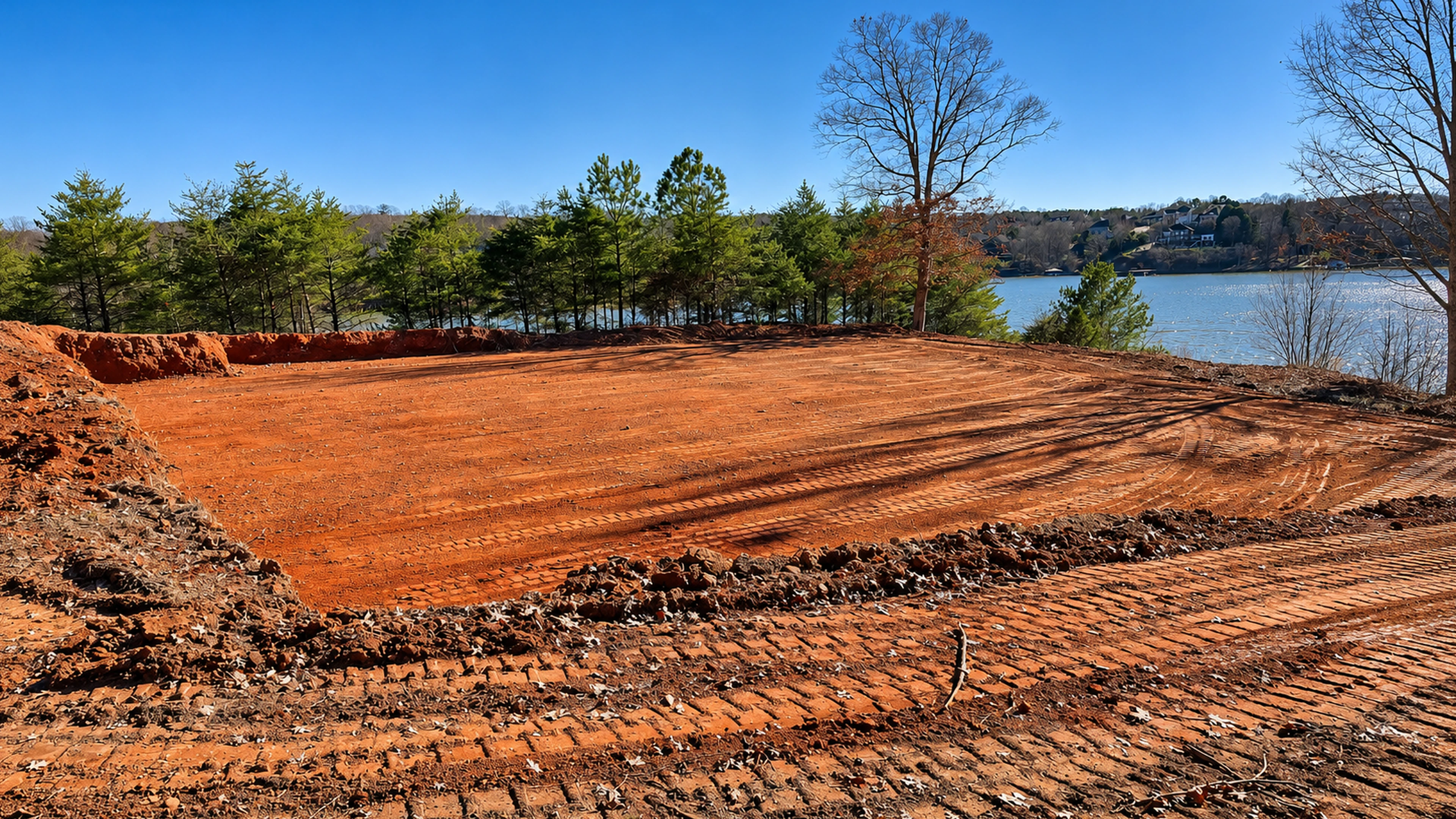
Identify what you already know about the site
An excavation plan needs to account for the real property, not just the drawing. Tell us about access limits, existing structures, wet areas and earlier work on the land. Share current photos and the location of the proposed project to give the discussion a useful starting point.
A photograph cannot identify every buried condition. If you have records from previous construction, utility work or a septic installation, keep them available. Explain what those records show and where information is incomplete rather than assuming that an unknown condition is harmless.
Bring utility and site questions forward
Buried utilities need attention before excavation. NC811 coordinates notifications to member utilities, and private lines may require separate locating arrangements. Discuss the process and responsibilities before the planned start of digging.
If permits, site drawings or other project approvals are relevant, identify what is ready and what is still in progress. Avoid using a target start date as a substitute for the information the work depends on.
Our foundation excavation can be discussed alongside the access, plans and site conditions for your proposed build.
Allow the conversation to change with the conditions
Weather and conditions on the property can affect the sequence of earthwork. Tell us which later stages depend on excavation and who is coordinating them. If the plans change, bring the revised information into the scope discussion before relying on an earlier estimate.
We help residential and commercial customers around Taylorsville and Hickory with excavation and grading. Call us for a free estimate and describe the site concerns you already know about. The goal of that conversation is to understand the work you need and identify the next useful step.