
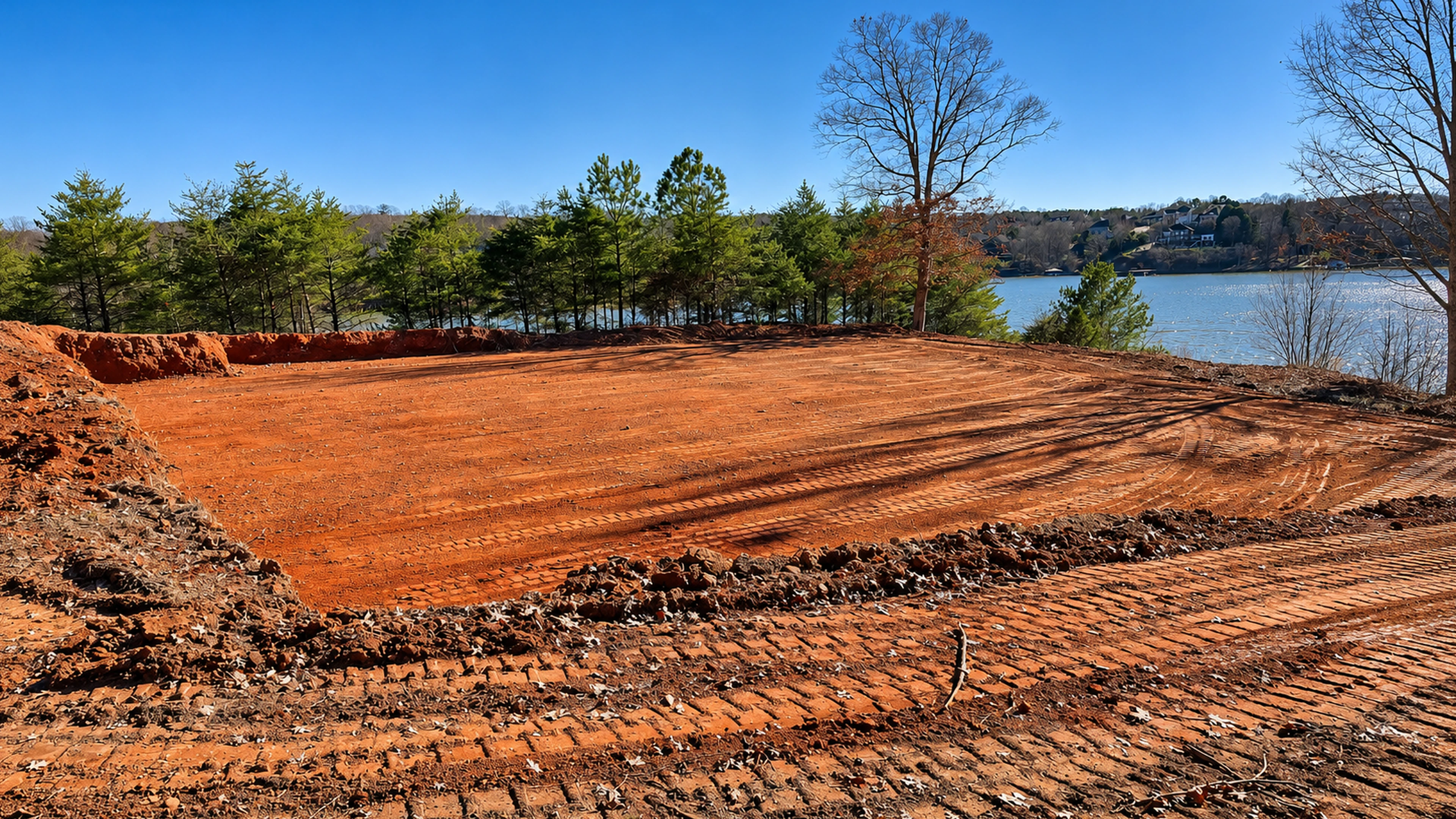
Mark the purpose of each work area
A construction project needs space for more than the building itself. Equipment access, deliveries and temporary working areas can all affect the land. Discuss these needs on the same plan so that each area has a defined purpose before clearing starts.
Identify trees, vegetation, structures and usable outdoor areas you want to preserve. Photographs and a marked plan help introduce those priorities, but the work limits still need to be understood on site. Do not rely on an informal description such as “keep the trees near the back” when the exact area matters.
Our land clearing can be discussed around the footprint and access your project requires.
Coordinate the order of work
Clearing a space twice or reopening an area after later construction can create avoidable disruption. Bring your builder and other relevant contractors into the sequencing conversation. Identify which decisions are settled and which could still change the building location, access or earthwork footprint.
Discuss where excavated material will go and whether the project calls for material to be removed or brought in. Keeping material on site is not automatically suitable; its intended use and the project requirements still matter. Ask the contractor to explain the proposed handling within the estimate rather than assuming every excavated load can be reused.
Include the end of the job in the plan
A reduced disturbance goal also needs a clear handoff after excavation. Ask which temporary areas remain, which need further grading and who handles the final surface treatment. For excavation and grading around Taylorsville and Hickory, contact Barnes Backhoe & Grading with the current plans and your priorities for the property.