
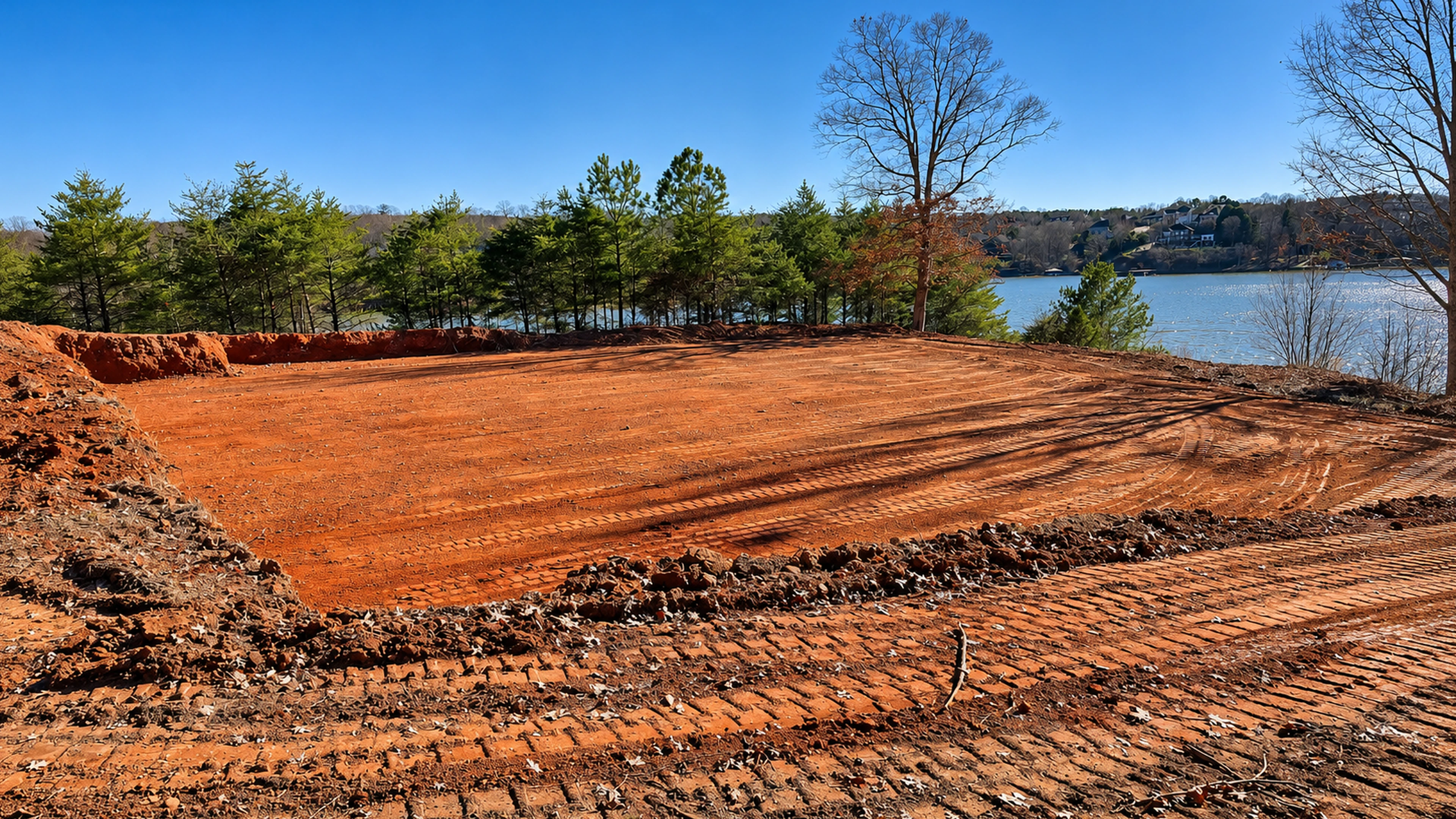
Describe the route to the work area
Complex terrain is not limited to the place where digging will occur. The route from the road, turning space and areas used during construction can influence the project too. Explain any known restrictions and identify access that must remain available for normal use.
Share photographs showing the approach as well as the proposed footprint. Tell the contractor where the site changes level and which nearby features must remain. These details help introduce the property without assuming they replace an on-site assessment.
Raise design questions before choosing a method
When a planned improvement involves changes in ground shape, ask how the work relates to drainage, neighboring ground and existing structures. If those relationships require measurements or professional design, establish who supplies the information before a solution is priced as final.
Describe known wet areas, previous fill or earlier excavation where that information is available. An uncertain condition should remain visible in the conversation. Do not rely on an assumption that all uneven ground presents the same problem or calls for the same material handling.
Discuss site grading for your terrain alongside access, the intended use and any current drawings.
Choose a clear sequence and handoff
Ask how clearing, excavation and grading connect where more than one stage is needed. Identify the condition the following contractor expects and which decisions must be resolved first. Barnes Backhoe & Grading offers free estimate conversations for projects around Taylorsville, Hickory and surrounding communities, based on the work and site information you can share.