
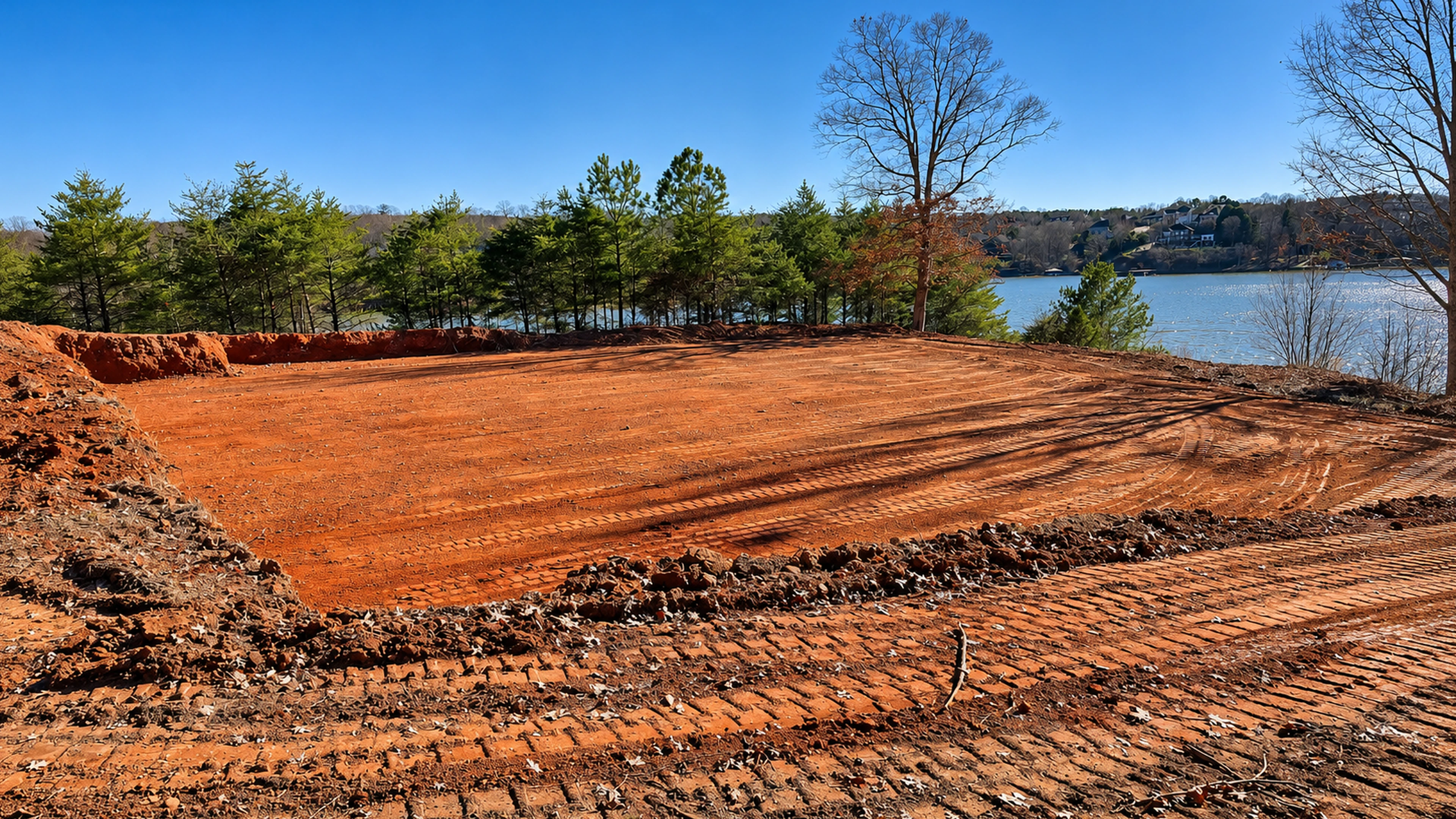
Describe the landscape before the change
A wooded area, an uneven site or restricted access can make a project more complex than its footprint suggests. Introduce those conditions with photographs and available drawings. Explain how the property is used now and what you want it to support after the work.
Name the features that must remain, including structures, vegetation and access routes. The space between them may be as important as the area being cleared or excavated. Avoid assuming that a machine can work wherever a person can walk; ask the contractor to assess the access and working area.
Connect the improvement to surrounding terrain
Earth shaping should be discussed in relation to adjacent ground, known wet areas and later construction. Ask where the proposed work transitions back to the existing property. If slope, stability or drainage questions require design input, identify that need before a particular approach is assumed.
Discuss how material will be handled and which parts of the landscape change belong in the estimate. Clearing, grading and excavation can support the same goal while serving different purposes. Naming the tasks helps you understand what the proposed work achieves.
Bring your plans for site grading together with the access and terrain questions specific to your property.
Plan the stages around the land
Ask how the work will be sequenced and what decisions must be settled before the next stage. A clear first step can be more useful than an undefined promise to transform the whole site. Barnes Backhoe & Grading offers free estimate conversations for excavation and grading around Taylorsville and the surrounding communities.