
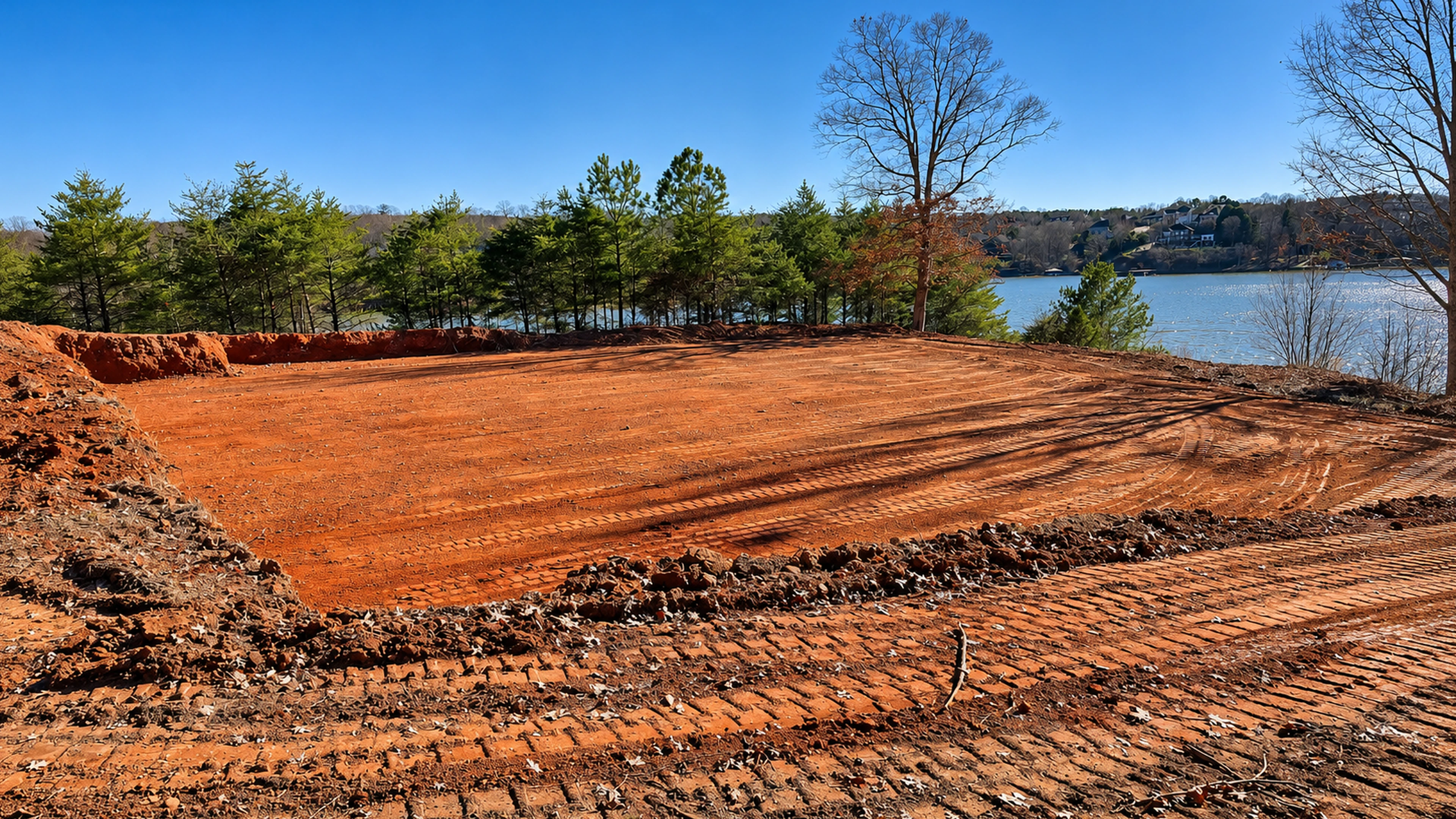
Use information to narrow the work
A smart excavation plan begins by distinguishing necessary work from work added through uncertainty. Identify the proposed footprint, access and installation areas on the current project drawing. Then discuss what information is missing before treating every open question as a reason to disturb a larger area.
Share preservation priorities at the same time. Trees, usable ground and existing access may have a place in the finished property. The contractor needs to understand both the development goal and the parts of the site you want to retain.
Connect temporary activity to the long-term layout
Construction requires temporary space for equipment and materials. Discuss whether that space overlaps future improvements and how it will be treated after the work. This can make the relationship between temporary disturbance and permanent development more deliberate.
Ask how the sequence handles later buildings, access or septic work. A first phase that ignores the final layout can leave preparation to be repeated. Where plans remain uncertain, identify the decision needed before committing to a particular earthwork stage.
Our article on limiting unnecessary site disturbance provides practical questions for a sustainability-focused estimate conversation.
Review the benefit in project terms
Ask what a proposed approach improves: a clearer work limit, a better-coordinated handoff or a more useful sequence. Specific answers are more informative than broad claims about smart equipment. Contact Barnes Backhoe & Grading with your development plans around Taylorsville and Hickory to discuss the excavation and grading your property needs.